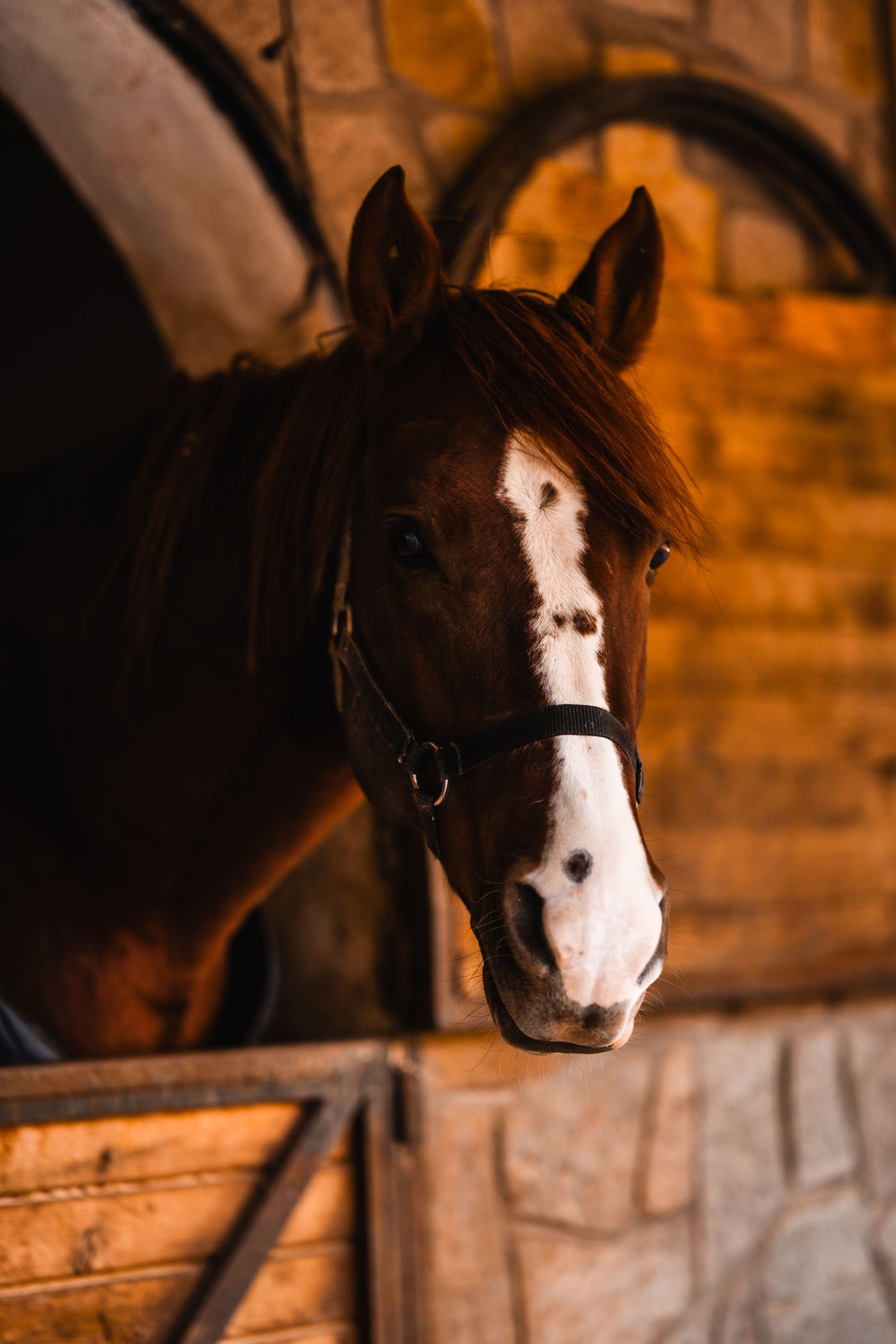
Here is the number most first-time buyers get wrong, and the direction they get it wrong in: the purchase price is not the cost of the horse. It is the entry fee. A $15,000 horse and a $150,000 horse eat the same hay, throw the same shoes, and colic with the same disregard for your savings. What you are really buying is a standing annual commitment — and for most owners in the United States, that commitment lands somewhere between $12,000 and $45,000 a year, before a single ribbon is pinned.
That is a wide range, and honest for being wide. Where you fall in it comes down to five decisions, most of which you make before the horse ever arrives.
Board: the decision that sets your budget
Board is the largest line in almost every horse budget, and the one with the widest spread. Field board — a shelter, grass, hay, and someone checking your horse twice a day — runs around $800 a month in most of the country. Full board at a barn with stalls, turnout, and daily care is closer to $2,000. Add a training program and you are near $3,800. A show barn on the A-circuit, with grooming, schooling, and a trainer who answers texts on Sunday, can pass $6,500 a month before the first entry fee.
Multiply by twelve and the picture sharpens: board alone spans roughly $9,600 to $78,000 a year depending on the life you choose. Note the word choose — this is the one cost that is genuinely elective, and the honest question is not "what can I afford?" but "what does this horse, doing this job, actually need?" A pleasure horse in full training board is paying for services it never uses.
Geography moves every number on this page. The West Coast runs about ten percent above the national norm; the Midwest and South can run twenty-five percent below it. The same horse, the same care, priced two states apart, can differ by five figures a year.
Farrier and vet: the non-negotiables
A horse needs its feet done every five to seven weeks whether it is winning at Devon or napping in a field. Budget about $2,400 a year for shoeing; a barefoot horse on trims costs less, a horse with corrective work costs more, and every farrier will tell you which one yours is.
Routine veterinary care — spring and fall vaccines, dentistry, deworming, the occasional "he just seems off" visit — runs about $2,600 a year in most regions. That figure covers the horse that stays healthy. It does not cover the horse that doesn't, which brings us to the line every experienced owner funds and every new owner skips.
The emergency line
Colic surgery bills commonly land between $8,000 and $15,000. A soft-tissue injury can mean months of stall rest, rehab, and diagnostics that arrive in $600 increments. You will not spend this money every year. You should be able to spend it any year. The practical answers are two, and they are not exclusive: an emergency fund you never touch, and insurance.
Mortality and major-medical insurance for a horse typically prices around three percent of the horse's value plus a few hundred dollars in base premium — so roughly $1,400 a year on a $30,000 horse, and proportionally more as the value climbs. Whether it is worth it is a genuine judgment call: on an $8,000 pleasure horse, many owners self-insure; on a $80,000 investment, few sleep well without cover. The one wrong answer is not deciding at all.
The quiet thousand-and-eight-hundred
Supplements, fly spray, blanket repairs, a new saddle pad because the old one is suddenly "his old one," clinic fees, the trailer-hitch part you didn't know existed — the miscellany of horse ownership reliably absorbs about $1,800 a year, and owners who claim otherwise have simply stopped counting. Put it in the budget so it stops surprising you.
Showing: the optional multiplier
Everything above keeps a horse. Competing one is a second budget on top. A regional season — local shows, modest hauling, day fees — adds around $8,000 a year. A national campaign runs $25,000 or more once you count entries, stabling, hotels, and the trainer's split. International sport starts at $60,000 and does not stop there. None of this is a complaint; it is simply where the money goes, and it is why "how much does a horse cost?" has no answer until you say what you want to do with one.
Run your own number
Averages are where budgets go to die. Your number depends on your region, your board choice, your ambitions, and whether you insure — which is exactly why we built the cost of keeping calculator: set those four things and it returns your annual figure, your monthly figure, and the five-year total cost of ownership including the purchase. Two minutes, no email required.
Run it before you shop, not after. A budget set in advance is a negotiating position; a budget discovered afterward is a payment plan.
And if the number still works and the search is on: the breed field guide will tell you what your budget actually buys in each part of the market — or tell us your brief and let someone on your side of the table do the looking.